
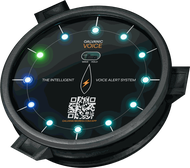




In aviation, they say there are two types of pilots: those who have landed gear-up, and those who will. The maritime world has its own version: those who have run out of fuel at sea, and those who will. I belong firmly to the first category—and in my defense, the consequences are remarkably similar. Embarrassing, expensive, and entirely preventable with better instrumentation.
A Confession
Yes, I’ve done it. Drifted silently into a marina on a prayer and residual momentum, pretending it was an intentional sailing maneuver while the engine coughed its last. The fuel gauge said I had a quarter tank. The fuel gauge, as it turns out, was a pathological liar.
But here’s what I discovered while bobbing helplessly and waiting for the maritime equivalent of AAA: I was not alone. Running out of fuel is so common that insurance companies don’t even bother raising your premium for it. It’s just… expected.
Which raises an uncomfortable question: in 2024, when our phones can identify a bird from a blurry photo and our cars can parallel park themselves, why do boat fuel gauges still have the accuracy of a fortune cookie?
The Scale of the Problem (It’s Not Just You)
Let’s look at the numbers, because misery loves company:
- United States (USCG 2024): 3,887 recreational boating incidents reported. Machinery failure, including fuel system problems: 289 incidents, 13 deaths, 94 injuries. Running out of fuel ranks among the top causes of boating accidents.
- Europe (EMSA/SeaHelp 2024): Fuel-related assistance calls increased 18% compared to 2023. Apparently, Europeans are also believers in the “quarter tank means plenty” school of thought.
- United Kingdom (RNLI): Over 9,000 lifeboat launches annually, with engine and fuel problems consistently ranking among top reasons.
Why This Keeps Happening
You might think running out of fuel is a symptom of poor planning or inexperience. And sometimes it is. But the real culprit is more insidious: we’ve been using fundamentally terrible fuel measurement technology for decades.
Marine fuel gauges typically use a float arm with a resistive sender. This technology is essentially unchanged since the 1930s. It worked reasonably well for rectangular automotive fuel tanks in vehicles that stay level. Boats, however, have neither rectangular tanks nor any interest in staying level.
The Float Arm Problem
Your fuel gauge measures where the float is, not how much fuel is in the tank. Heel the boat 15 degrees and your “half tank” becomes a “quarter tank” on one side. Hit some waves? Watch the needle bounce between full and empty like a metronome with anxiety issues. The gauge isn’t lying exactly—it’s just answering a completely different question than the one you’re asking.
Add tank shapes that would make Escher proud (curved hulls don’t accommodate rectangular tanks), fuel sloshing around in anything other than flat calm, and senders that drift out of calibration, and you have a system designed for disappointment.
The Diesel Problem: It Gets Worse
If you have a gasoline outboard, fuel measurement is merely difficult. If you have a diesel inboard, it’s practically a dark art.
Here’s what nobody tells you when you buy a sailboat with a diesel auxiliary: the engine pumps far more fuel than it actually burns. A diesel consuming 29 gallons per hour at wide-open throttle might be pumping 57 gallons per hour through the injection system. The excess goes back to the tank via a return line.
Actual diesel consumption = Supply flow minus Return flow
This means you need two flow sensors, and your accuracy is only as good as the difference between two imprecise measurements. If each sensor is off by 3%, your consumption reading could be off by 6% or more. That “50 miles to empty” might actually be 47 miles… or 32.
But wait, it gets better. The return fuel is hot—typically 10-30°C warmer than supply fuel. Hot fuel is less dense, so the same volume represents less mass. Without temperature compensation, you’re adding another 5% error. Your flow sensors are now essentially sophisticated random number generators.
The One-Third Rule: Admitting Defeat
Experienced mariners follow the “one-third rule”: use one-third of your fuel going out, one-third coming back, and keep one-third in reserve.
┌─────────────────────────────────────────┐
│          FUEL TANK CAPACITY             │
├─────────────┬─────────────┬─────────────┤
│  1/3 OUT    │  1/3 BACK   │  1/3 RESERVE│
│  (to dest)  │  (return)   │  (emergency)│
└─────────────┴─────────────┴─────────────┘
This rule is clever. It’s also an admission of total defeat. We’re essentially saying: “Our fuel measurement is so unreliable that we need to carry 50% more fuel than we theoretically need, just in case.”
In aviation, this would be unacceptable. Imagine if pilots said, “Well, we can’t really trust the fuel gauges, so we’ll just carry enough for three trips and hope for the best.” The FAA would have words.
What Running Out Actually Costs
Beyond the embarrassment—and trust me, there’s plenty of that—running out of fuel has real consequences:
| Scenario | Cost (USD) |
|---|---|
| Fuel delivery (without membership) | $150-300 + fuel |
| On-water tow (10-20 miles) | $500-1,000+ |
| Extended offshore tow | $1,000-3,000+ |
| Commercial towing rate | $250-350/hour |
| Sea Tow membership (annual) | $179/year |
A single tow can cost more than a proper fuel monitoring system. The membership is cheaper than one rescue. This is the marine equivalent of “an ounce of prevention”—except we keep ignoring it.
The Hidden Danger: It’s Not Just Your Wallet
Running out of fuel isn’t just expensive. It can be deadly.
- Drift into shipping lanes or hazardous areas while waiting for help
- Weather exposure: Hypothermia and dehydration are real risks during extended waits
- Night stranding: No propulsion, possibly inadequate lighting
- Inability to maneuver: Away from rocks, shallow water, or approaching vessels
- Capsizing risk: In rough seas, engine power provides stability through controlled speed
According to USCG data, 77% of fatal boating accidents involve operators with no formal training. But even trained sailors can’t manage fuel they can’t measure. You can’t make good decisions with bad information.
The Technology We Already Have (But Don’t Use)
Here’s the frustrating part: better fuel monitoring technology exists. It’s called NMEA 2000, and your boat probably already has it.
Modern electronically-controlled engines calculate fuel consumption from injector pulse width with remarkable accuracy. We’re talking ±2%—far better than that float arm gauge bouncing around like it’s at a rave.
Why ECU Data Beats Flow Sensors
- No sensor drift: Injector calibration is factory-set
- No installation errors: No plumbing modifications needed
- Temperature compensated: ECU knows fuel temp from onboard sensors
- Direct measurement: Measures what’s actually injected, not what flows through pipes
- Emissions compliance: Must be accurate to meet EPA/IMO regulations
Real-world accuracy reports from the field:
- Volvo Penta D6 common-rail: Within 2% over several thousand gallons tracked
- Yamaha/Suzuki outboards: Described as “spot on” by users comparing to actual fuel purchased
- Mercury SmartCraft: Within 2% after proper calibration
The Market Nobody Talks About
The marine engine market is massive—$12.5-13.3 billion globally in 2024. Over 80% of new boats over 25 feet sold since 2015 have NMEA 2000 equipment. The technology to solve the fuel measurement problem is already installed on millions of boats.
The major engine manufacturers all offer NMEA 2000 connectivity:
- Yamaha (25-42% outboard market share): Native NMEA 2000 on all Command Link Plus models
- Mercury Marine (14-20% market share): SmartCraft with NMEA 2000 gateway
- Suzuki (10-15%): Native NMEA 2000 on DF-series
- Volvo Penta: EVC systems with NMEA 2000 output (MDI gateway for older EVC-A/B)
- Yanmar: J1939 protocol requiring gateway (Yacht Devices, Actisense)
- Cummins Marine: J1939 with gateway required
The NMEA 2000 Labyrinth: Why Your Data Is Trapped
So if NMEA 2000 is installed on millions of boats and modern engines calculate fuel consumption with laboratory precision, why can’t you see it on your chart plotter? Welcome to the labyrinth.
The PGN Architecture: A Field Can Be “Not Available”
NMEA 2000 organizes data into Parameter Group Numbers (PGNs). Engine data lives primarily in PGN 127489 (“Engine Parameters, Dynamic”), which includes fields for RPM, coolant temperature, oil pressure, and—crucially—fuel rate.
Here’s the trap: a device can be fully NMEA 2000 certified while transmitting PGN 127489 with the fuel rate field set to “Not Available.” The standard defines the format of the message, not the content. An engine manufacturer can broadcast RPM, temperature, and hours while leaving fuel rate as 0xFFFF (the NMEA 2000 code for “data not available”)—and still display the certified logo.
What NMEA 2000 Certification Actually Guarantees
According to the National Marine Electronics Association: “The certification process does not guarantee data content—that is the responsibility of the manufacturers.”
Certification ensures devices can coexist on a network and exchange data in compatible formats. It does not ensure that fuel rate is broadcast, that data is accurate, or that all fields are populated. A certified device with empty fuel data is still certified.
Proprietary PGN Ranges: The Walled Gardens
NMEA 2000 reserves specific PGN ranges for manufacturer-proprietary data: 65280-65535 for single-frame messages, 126720 for fast-packet, and 130816-131071 for additional proprietary use. Manufacturers can—and do—broadcast fuel data in these proprietary ranges.
The result? Your engine might be transmitting accurate fuel consumption data right now, but in a proprietary format that only the manufacturer’s own displays understand. Your Garmin, Raymarine, or Simrad MFD sees nothing—or worse, sees “0.0 L/hr” because it’s looking at the standard PGN where the manufacturer chose to write “Not Available.”
This isn’t a bug. It’s a business model. Want fuel data? Buy our proprietary display.
The Gateway Problem: J1939 vs. NMEA 2000
Many marine diesels don’t speak NMEA 2000 natively. They use J1939—a protocol designed for trucks and industrial equipment. Yanmar, Cummins, Caterpillar, and many others output J1939, which requires a gateway device to translate into NMEA 2000.
These gateways cost $200-600 and require configuration: selecting the correct engine protocol, setting instance numbers for multi-engine installations, and sometimes using manufacturer-specific dealer tools to “enable” certain data outputs. Get any setting wrong, and you’ll see RPM but no fuel rate—or fuel rate from the wrong engine—or nothing at all.
And here’s the catch: the gateway can only translate what the engine chooses to broadcast on J1939. If the engine manufacturer decided not to include fuel rate in their J1939 output, no gateway in the world will conjure it into existence.
The Configuration Maze
Even when fuel data is theoretically available, accessing it requires navigating a maze of configuration steps:
- Engine auto-configuration: Some systems require running a dealer tool to “register” new network devices before they’ll share data
- Instance numbers: Multi-engine boats need each engine assigned a unique instance (0, 1, 2…). Misconfigure this and Engine 1’s data shows as Engine 0—or disappears entirely
- Display configuration: Your MFD must be told to look for engine data, which PGNs to parse, and how to display them. This is often buried three menus deep in settings most owners never touch
- Protocol version mismatches: Older gateways may speak an earlier NMEA 2000 protocol version than your MFD expects, causing data to display incorrectly or not at all
The average boat owner, confronted with this complexity, gives up. They accept that their $50,000 engine with laboratory-grade fuel measurement will display “—” on their $3,000 chart plotter.
The Liability Question: Why Manufacturers Stay Silent
Here’s the uncomfortable truth nobody discusses openly: engine manufacturers have little incentive to broadcast fuel consumption data, and significant reasons to avoid it.
Consider the liability calculus: if a manufacturer broadcasts fuel rate and a boat owner runs out of fuel while relying on that data, who’s responsible? The owner, for trusting the display? The MFD manufacturer, for showing the data? The engine manufacturer, for providing it? The lawyers would have a field day.
By broadcasting “Not Available” in the fuel rate field, manufacturers avoid this entirely. No data, no reliance, no liability. Meanwhile, the ECU continues calculating fuel consumption internally—it must, for emissions compliance—but that information stays locked inside the engine, invisible to the network.
The irony is exquisite: modern diesels meeting EPA Tier III or IMO Tier III emissions standards must measure fuel injection with sub-millisecond precision. The data exists. The accuracy is there. The manufacturer simply chooses not to share it with you.
So Why Are We Still Running Out of Fuel?
Three reasons:
1. The Data Exists But Nobody Shows It
Your engine is probably broadcasting accurate fuel consumption data on the NMEA 2000 network right now. But unless you have the right display configured the right way, you’ll never see it. You’ll see RPM. You’ll see coolant temperature. You might see instantaneous fuel rate. But “fuel remaining” and “range to empty”? That requires integration across multiple data sources—and most systems don’t bother.
2. The One-Third Rule Creates Complacency
We’ve been told to carry massive reserves “just in case.” This works until it doesn’t. When you consistently return with fuel to spare, you start to think that “quarter tank” means you can make it. And then one day—maybe with stronger headwinds, or a fouled prop, or just aging injectors—you can’t.
3. Nobody Integrates This Data Intelligently
Here’s what your boat knows right now:
- Exact fuel consumption rate (from engine ECU)
- Current speed over ground (from GPS)
- Distance to destination (from chart plotter)
- Wind speed and direction (from wind instruments)
- Current conditions and weather trends
Here’s what your boat could tell you with basic arithmetic:
- “At current consumption and speed, you have 4.2 hours of motoring range”
- “Fuel required to reach destination: 18 gallons. Estimated fuel remaining: 22 gallons. Margin: 18%”
- “Warning: Current consumption rate reduces range below safe reserve for planned route”
Your boat doesn’t tell you these things. It just waits for you to run out of fuel, then beeps helpfully as you drift.
What Would Actually Work
Solving the fuel problem doesn’t require new sensors or exotic technology. It requires:
- Reading the data we already have: ECU fuel consumption, GPS position, tank sensors
- Basic math: Fuel remaining ÷ consumption rate = time to empty. Speed × time = range.
- Context awareness: Know how far we are from fuel, from destination, from shore
- Intelligent alerts: “You won’t make it at this speed” is more useful than a fuel light at 1/4 tank
- Historical learning: Track actual vs. predicted consumption to improve estimates over time
Modern common-rail diesels achieve ±2% fuel measurement accuracy. Float-arm gauges are often off by 20% or more. We’re using 1930s technology when 2020s technology is already installed and broadcasting.
The Uncomfortable Truth
Every year, thousands of boats run out of fuel. Most of those boats have engines with accurate fuel consumption data available on their NMEA 2000 networks. The data exists. The math is trivial. The consequences are expensive at best, fatal at worst.
We solved this problem in aviation decades ago. We solved it in cars. We’ve apparently decided that boats are special, and that drifting helplessly while watching the fuel gauge needle bounce around is just part of the maritime experience.
It doesn’t have to be.
I ran out of fuel once. It was expensive, embarrassing, and entirely preventable. The data to know I was running low existed—my engine was broadcasting it. My chart plotter just didn’t bother to tell me. Instead, it waited until I was dead in the water, then helpfully showed me exactly where I was drifting.
There are two types of boaters: those who have run out of fuel, and those who will. But there’s also a third type we could create: those whose boats actually tell them when they’re about to run out, in time to do something about it.
The technology exists. The data is being collected. We just need to stop trusting fuel gauges designed when Lindbergh was still flying.
Have you run out of fuel? We’d love to hear your story—there’s no judgment here, only solidarity. Did your fuel gauge lie to you? Did you trust the one-third rule and still come up short? Share your experience in the comments below, and maybe we can collectively pressure the industry to fix this embarrassingly solvable problem.


The fuel gauge accuracy problem you describe cost me a very expensive tow last summer. My tank sender showed quarter full, I calculated I had plenty of reserve for a 40-mile motor back to port, and the engine died eight miles from the marina. Turns out the sender was reading the air pocket above the fuel, not the actual level. The marina quoted me €3,500 for a proper fuel flow meter installation – which now seems cheap compared to the €800 tow bill and the embarrassment of calling the coastguard.