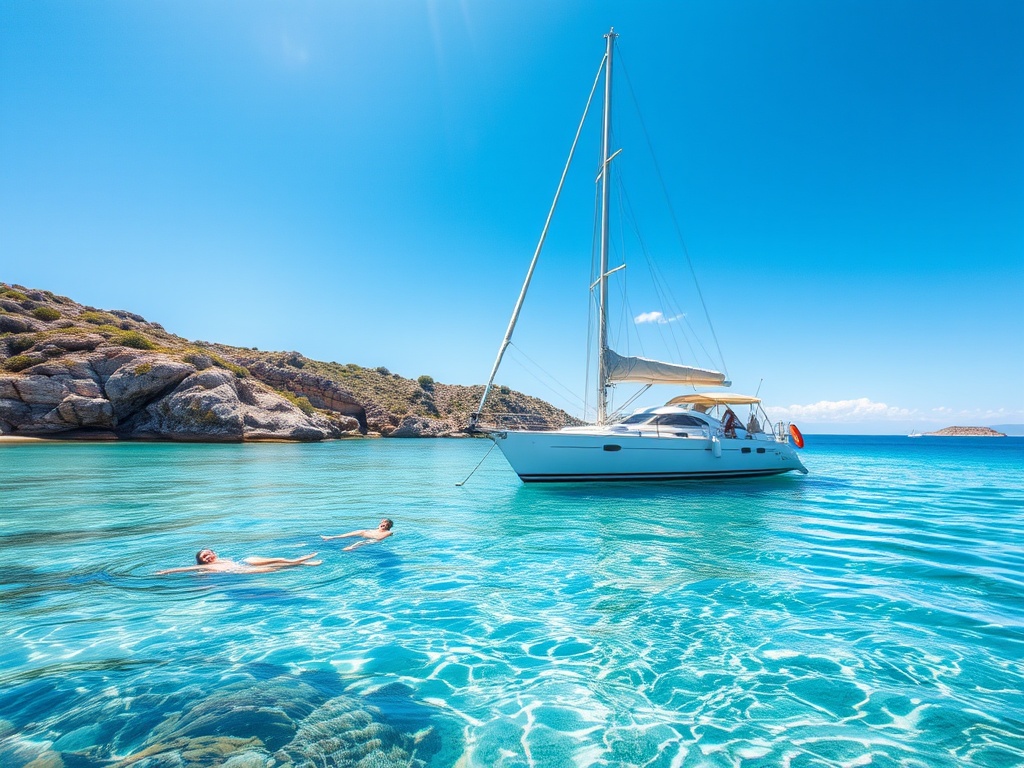
One bay. One night. Five chapters. Five anchor-keepers — find yours.
5 chapters21 questions~5 minutes
The SentinelThe DenierThe PragmatistThe Blissful SailorThe Marina Convert
ⓘ How we use your answers
Before you begin
This is a research survey by Galvanic Works S.L. studying how recreational sailors sleep — or don't — at anchor. Your anonymous chapter answers feed into research on maritime fatigue (preprint: DOI 10.20944/preprints202603.1014.v2). We also build and sell maritime safety products — if you share your email at the end, you may opt in to hear about them.
Legal basis: legitimate interest (research) for anonymous chapter data; consent (Art. 6(1)(a) GDPR) for any email you give us. Retention: 24 months. Data controller: Galvanic Works S.L. Privacy Policy.
By continuing, you confirm you are 18 or older.
Chapter 1
The Arrival
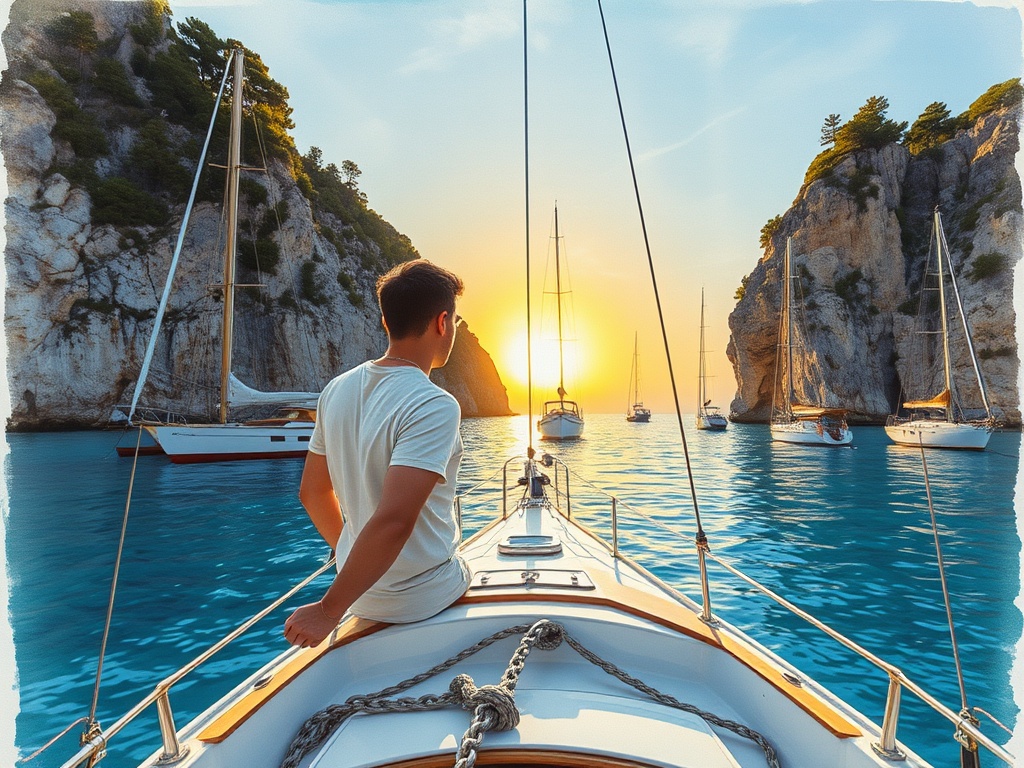
You've been staring at this bay on the chart for three weeks. Studying the holding. Checking the swell forecast. Reading pilot book reviews from 2014. Now you're here, and it's better than the photo. The hook goes down in 5.2 metres over sand. You reverse, feel the chain bite, and watch the GPS settle into a lazy circle. The snubber is on. The rode is textbook. You have done everything right. What happens next has nothing to do with skill.
Question 1
First: how long have you been doing this?
Please select an answer to continue.
Question 2
How many nights a year do you actually sleep at anchor?
Please select an answer to continue.
Question 3
What kind of anchoring are we talking about?
Please select an answer to continue.
Question 4
Who else is aboard tonight?
Please select an answer to continue.
Question 5
Where do you typically drop the hook?
Select all that apply
Please select at least one option.
Chapter 2
The Sunset
Golden hour. The cockpit cushions are out. Someone opens wine. The anchorage fills behind you — a catamaran, two charter boats, a Dutch steel ketch that drops its hook thirty metres away and calls it plenty. You watch each one swing and do quiet geometry in your head. The forecast says 12 knots backing northwest by midnight. The bay faces northwest. Nobody else appears to have noticed this. You have another glass and try not to think about it.
Question 6
Compared to sleeping at home, sleeping at anchor is...
Please select an answer to continue.
Question 6B
Be honest: how would you rate your typical sleep quality at anchor?
Please select an answer to continue.
Question 6C
When you first lie down, how long before you actually fall asleep?
Please select an answer to continue.
Question 6D
How many hours of actual sleep do you get on a typical night at anchor?
Please select an answer to continue.
Scope ratio is a number you calculated when you dropped the hook. It was correct at the time. But the tide is falling, which shortens your effective scope. And the wind is building, which increases the load on the chain. And the holding is sand over clay, which means the anchor set beautifully in the top layer but has no idea what's underneath. The maths that made you feel safe at 7PM will be a different equation by midnight. The anchor doesn't know this. Neither do you, because you'll be asleep.
Question 7
How many times do you wake per night?
Please select an answer to continue.
Chapter 3
The Small Hours
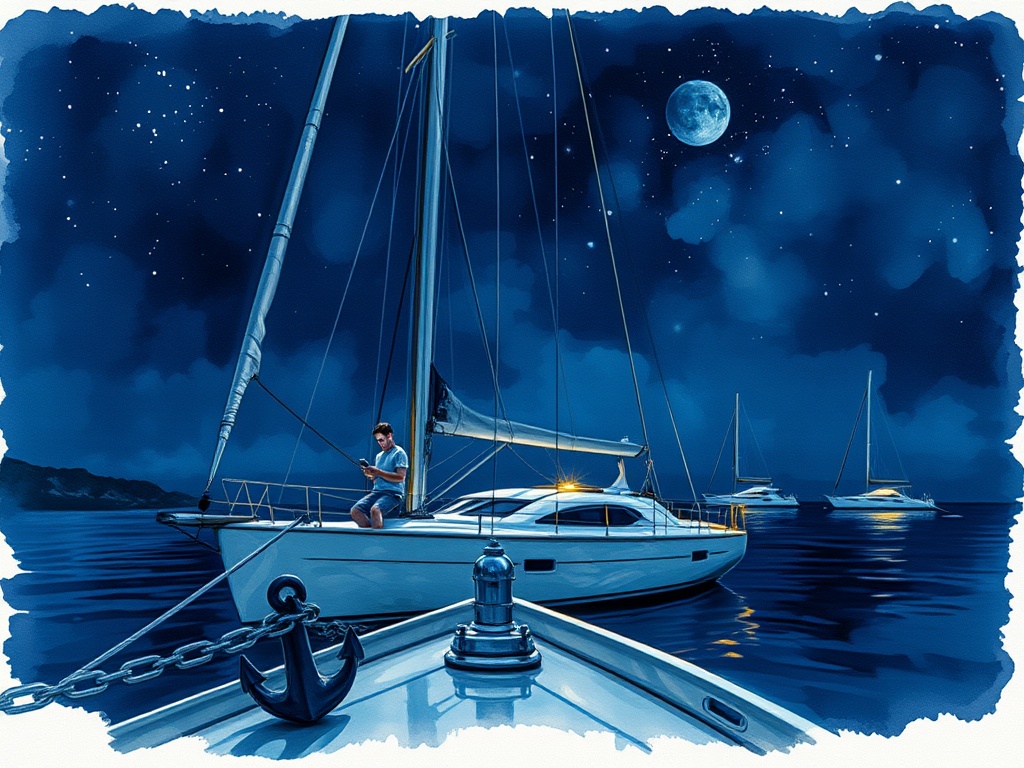
2:17AM. You're awake. You don't know why. The hull is making a low groaning sound — the chain shifting across the seabed, or the keel talking to the current, or something else entirely. The boat has rotated. You can tell because the moonlight is coming through the wrong porthole. In bed, in the dark, you try to reconstruct the anchorage from memory. Where was the catamaran? Where were the rocks? Is the wind stronger, or does it just sound louder at two in the morning? There's only one way to find out. You're already reaching for the phone.
Question 8
When you wake at 2AM, what do you check?
Select all that apply
Please select at least one option.
Question 9
After the check: how long to get back to sleep?
Please select an answer to continue.
Question 10
What actually keeps you awake?
Select your top 3
Please select at least one option (max 3).
The anchor alarm on your phone works by drawing a circle around your GPS position and screaming if you leave it. Simple. Except GPS accuracy drifts by 5–15 metres depending on atmospheric conditions, satellite geometry, and whether your phone is face-down on a cushion. Set the radius too tight and it wakes you every twenty minutes. Set it too wide and by the time it triggers, you're already in someone else's cockpit. Most people set it once, get three false alarms, widen the radius until it stops bothering them, and call it solved.
Question 11
Your anchor alarm: what is it?
Please select an answer to continue.
Question 12
Which app?
Select all that apply
Please select at least one option.
Question 13
Has your anchor alarm ever failed when you actually needed it?
Please select an answer to continue.
False alarms are more dangerous than no alarm at all. The first one gets your full attention — heart rate up, torch on, full deck inspection. The third one gets a groan and a glance at the screen. By the fifth, you've trained yourself to ignore the thing that's supposed to save you. Psychologists call it alarm fatigue. Sailors call it "that bloody app again." The result is the same: when the anchor actually drags, the alarm that cried wolf gets silenced in the dark by a thumb that's learned not to care.
Question 14
How often does your alarm cry wolf?
Please select an answer to continue.
Question 15
How much do you trust your anchor alarm?
Please select an answer to continue.
Chapter 4
The Morning After
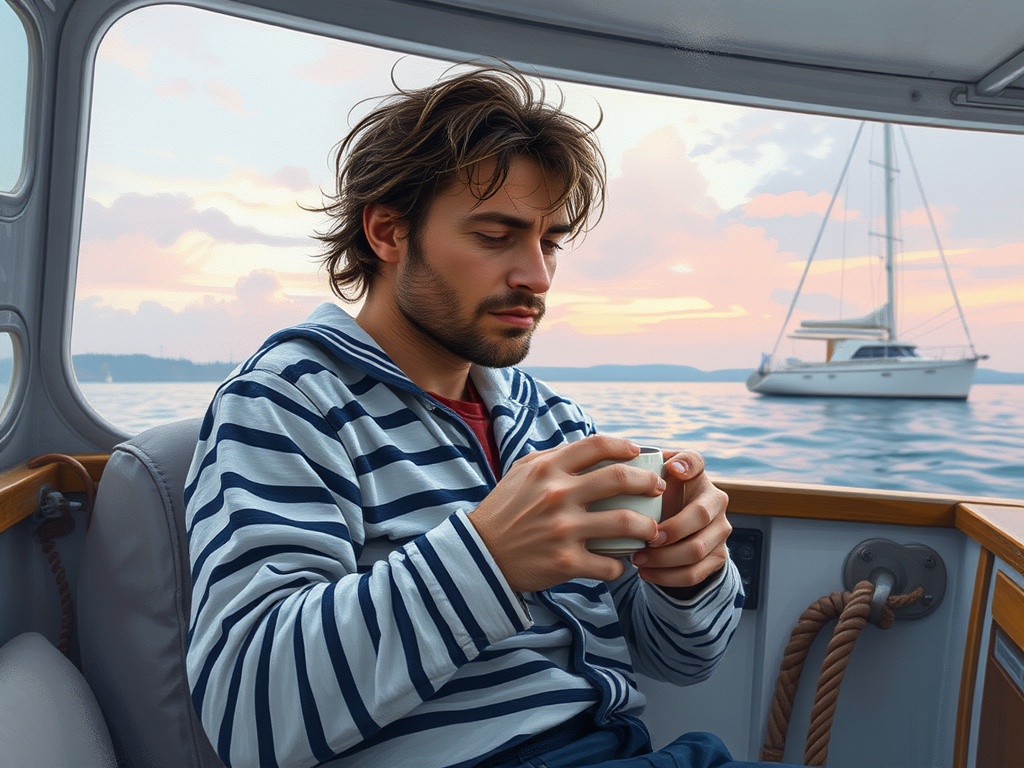
The light changes first. Grey through the hatch, then pink, then the hard white glare of a Mediterranean morning that says you've overslept. The kettle goes on. Your partner asks how you slept. "Fine," you say — which, translated from sailor, means: woke at midnight when the chain scraped, again at two when the wind built, again at four when the Dutch ketch started its generator, then lay rigid until dawn doing mental arithmetic about tidal range. You've had five hours of broken sleep. You feel like you've had three. There are passages to plan.
Question 16
After a night like that, how does it affect your sailing?
Select all that apply
Please select at least one option.
Sleep researchers have a term for what happens when you get five hours of fragmented rest: "subjective normalisation." You feel fine. You believe you're fine. Your actual cognitive performance tells a different story — slower processing, narrower attention, impaired risk judgement. You'll motor out of this bay, thread between two boats on a mooring field, round a headland with a ferry crossing, and read a tide table. Your brain will do all of these things slightly worse than yesterday, and you won't notice because that's the cruelest part of fatigue: it degrades the system you'd use to detect it.
Question 16B
Right now, the morning after a typical night at anchor — how sleepy do you feel?
Please select an answer to continue.
Question 17
Has poor sleep at anchor ever changed your actual plans?
Select all that apply
Please select at least one option.
Question 18
Has anchor anxiety ever caused tension aboard?
Please select an answer to continue.
Chapter 5
What Would Change Everything
Every sailor has a version of the same fantasy: the quiet cove, the still water, the sunset, the total absence of anyone telling you what to do. Anchoring is the point of the whole exercise. It's the reason people buy boats, learn to sail, cross oceans. And yet. Something about it isn't working. The freedom comes with a tax — paid in broken sleep, low-level dread, and mornings that start tired. The question isn't whether you love anchoring. You do. The question is what would let you actually enjoy it.
Question 19
If you could change ONE thing about sleeping at anchor, what would it be?
Select up to 2
Please select at least one option (max 2).
Question 21
Want to see what 200+ other sailors said?
Please select an answer to continue.
?
We know what kind of anchor sleeper you are.
Your profile is ready. Enter your email to unlock the full result — including your type, your boat, and your forum post. We'll also keep you posted on the research and what we're building to fix this.