One day sail. Five encounters. Thirteen rules. See where you stand.
5 chapters26 questions~5 minutes
ⓘ How we use your answers
Before you take the helm
This research survey by Galvanic Works S.L. studies how recreational sailors actually apply the COLREGs under time pressure. Your anonymous scored answers feed into research on maritime competency (preprint: DOI 10.20944/preprints202603.1014.v2). We also build and sell maritime safety products — if you share your email at the end, you may opt in to hear about them.
Legal basis: legitimate interest (research) for anonymous scored data; consent (Art. 6(1)(a) GDPR) for any email you provide. Retention: 24 months. Data controller: Galvanic Works S.L. Privacy Policy.
By continuing, you confirm you are 18 or older.
Chapter 1
The Harbour — Who Are You?
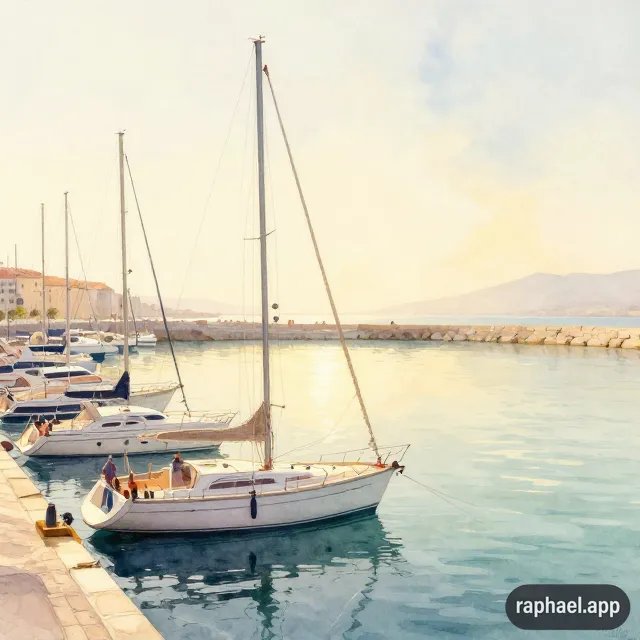
You're in the marina at eight in the morning. The forecast is good — twelve knots from the west, clear skies, moderate swell outside the breakwater. It's a day sail. Nothing ambitious. Just the kind of day where you motor out past the harbour wall, set the sails, and see what happens. But before you cast off, let's talk about you. Because who you are determines what happens next.
Question 1
First things first: how long have you been doing this?
Please select an answer to continue.
Question 2
What kind of sailing do you actually do?
Select all that apply
Please select at least one option.
Question 3
What's your highest sailing qualification?
Please select an answer to continue.
Question 4
Where do you primarily sail?
Select all that apply
Please select at least one option.
Chapter 2
The Confidence Check
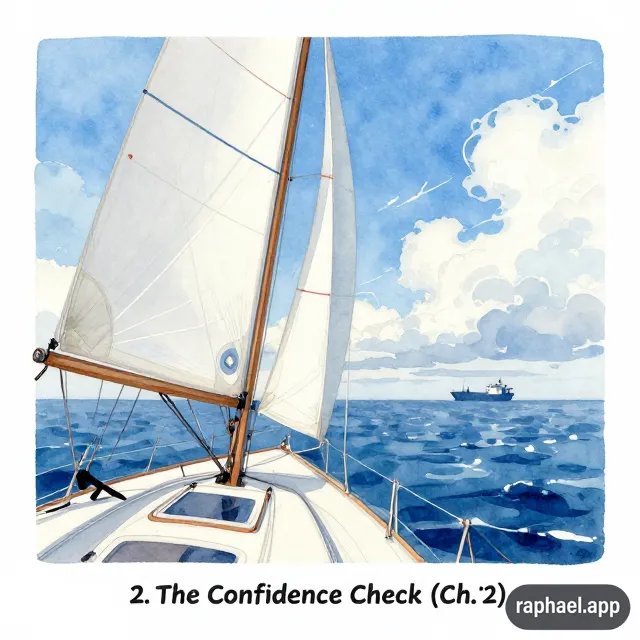
You're clear of the breakwater. The sails are up, the engine is off, and the boat is heeling nicely at six knots. A tanker is visible on the horizon. A fishing boat is working pots off the headland. A ferry is crossing ahead. None of them is a problem. Yet. Before we put you in the thick of it, one question: how well do you think you know the rules that govern all of this?
This is the uncomfortable bit. Not the quiz — that comes later. This is the moment where you commit to an opinion about yourself, knowing that in about three minutes, we're going to test it. The gap between what you think you know and what you actually know has a name. Psychologists call it the Dunning-Kruger effect. Sailors call it "that skipper."
Question 5
How confident are you in your knowledge of the COLREGs?
Please select an answer to continue.
Question 6
When did you last actually study or formally review the COLREGs?
Please select an answer to continue.
Question 7
How often do you encounter situations where COLREG knowledge is actually needed?
Please select an answer to continue.
Chapter 3
The Open Water — Test Your Knowledge
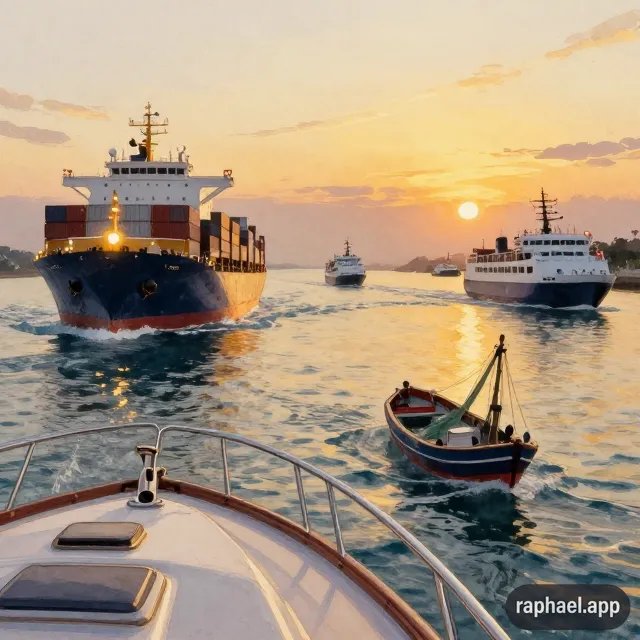
The wind has built. You're four miles offshore and the sea is alive with traffic. A ferry is crossing ahead. A cargo ship is on the horizon. A fishing boat is working nets to starboard. The day is no longer simple. Each of the next thirteen questions is a real situation — the kind you'll meet on any busy stretch of water. Answer from memory. No looking things up. Select "I don't know" rather than guess — honest answers make better research.
0/0 so far
You're on watch. The sea is moderate, the visibility is good, and you're making six knots under sail. Your crew is below, making lunch. The plotter shows three targets within five miles. You glance up. You glance at the instruments. You listen. But what, exactly, does the rulebook say you should be doing?
Question 8
Rule 5 requires every vessel to maintain a proper lookout at all times. Which senses does the rule specify?
Please select an answer to continue.
Two sails on the horizon, converging. You can see the other yacht's genoa — it's full. Your own is pulling nicely on port tack. Someone aboard is going to have to alter course. Both of you are looking at each other right now, wondering who moves first.
Question 9
Two sailing yachts are approaching each other. Yacht A has the wind on its port side, Yacht B on its starboard side. Who gives way?
Please select an answer to continue.
A container ship appears on the AIS. Twelve miles away, but closing at twenty knots. The plotter shows a CPA of half a mile — uncomfortably close. You're under sail, doing five knots. In open water. The textbook answer seems obvious. Is it?
Question 10
You are under sail. A large cargo ship is approaching on a crossing course in open water. Who is the stand-on vessel?
Please select an answer to continue.
Same ship. Same afternoon. But now you've rounded the headland and you're in the approach channel to the harbour. The cargo ship is behind you, catching up. The channel is narrow. The buoys are close on either side. The rules just changed.
Question 11
Same scenario, but now you are in a narrow channel and the cargo ship can only safely navigate within the channel. Who gives way?
Please select an answer to continue.
It's getting dark. The sun went down forty minutes ago. You're still two miles from the harbour entrance. The first lights are appearing on the water — red, green, white, all in different combinations, all moving at different speeds. You see a green light and a white light. No red. What are you looking at?
Question 12
At night, you see a green light and a white light but no red light. What does this tell you about the other vessel?
Please select an answer to continue.
Closer to the harbour, a vessel is stationary ahead. Three lights, stacked vertically. Red, white, red. It's not moving. It's not at anchor — no anchor ball, no single white light. What is it doing, and what should you do about it?
Question 13
You see three vertical lights: red, white, red. What type of vessel is displaying them?
Please select an answer to continue.
Your own lights. You turned the engine off three hours ago. You're under sail, no engine, twenty-eight feet of boat. The sun has set. You need to show the right lights. What, exactly, are the right lights?
Question 14
A sailing yacht under 20 metres is under sail only (no engine) at night. What lights is it required to show?
Please select an answer to continue.
You've started the engine — the wind dropped inside the harbour approaches. You're motoring at five knots. A powerboat is approaching from your starboard side, steady bearing, decreasing range. A textbook crossing situation. What does the textbook say?
Question 15
You are motoring in clear conditions. A power-driven vessel is approaching from your starboard side on a crossing course. What should you do?
Please select an answer to continue.
Something unusual. A vessel ahead with a single yellow light, flashing. Not a nav buoy — it's moving. You don't see this often. Most people don't see it ever. But it's in the rules.
Question 16
You see a vessel displaying a single yellow flashing light. What type of vessel is it?
Please select an answer to continue.
The visibility has closed in. Fog. Proper fog — the kind where you can't see the bow from the cockpit. Your world has shrunk to the radar screen, the compass, and whatever sounds carry across the water. Speed matters. But "safe speed" isn't a number — it's a judgement. And the rules list the factors you should be judging.
Question 17
In restricted visibility (fog), which of these factors should determine a "safe speed"?
Select all that apply
Please select at least one option.
The fog lifts. You can see again. And directly ahead — another vessel, coming straight at you. Both power-driven. Both at speed. Head-on. There is a simple, universal rule for this. One of the first things they teach you. Both vessels do the same thing.
Question 18
Two power-driven vessels are meeting head-on. What should both vessels do?
Please select an answer to continue.
You're back under sail now, heading home. A powerboat is approaching from your port side. You're the stand-on vessel — you have right of way. You maintain course and speed, as the rules require. But the other vessel isn't altering. It's getting closer. The rules cover this too. Most people don't know how.
Question 19
You are the stand-on vessel, but the give-way vessel is not taking action to avoid collision. What should you do?
Please select an answer to continue.
One more. Back in the fog, briefly. A sound carries across the water. A horn signal. Every vessel type makes a different noise in restricted visibility, at different intervals. A power-driven vessel making way sounds...
Question S
A power-driven vessel under way in fog should sound which signal at intervals of not more than 2 minutes?
Please select an answer to continue.
Chapter 4
Back Alongside — The Debrief
You're back in the marina. The lines are on, the fenders are out, the engine is off. The day sail is over. Thirteen questions later, you know something you didn't know this morning — or, more precisely, you know what you don't know. Before we show you the score, let's talk about how you got here. Where you learned this stuff. What still confuses you. What happened when it actually mattered.
Question 20
Where did you learn the COLREGs?
Select all that apply
Please select at least one option.
Question 21
Which COLREG topics do you find most confusing?
Select up to 3
Please select at least one option (max 3).
Question 22
Have you ever been in a close-quarters situation where you were unsure of the correct rule?
Please select an answer to continue.
Question 23
What did you do in that situation?
Please select an answer to continue.
Chapter 5
The Honest Reckoning
The kettle is on. The crew is on the pontoon, comparing notes about the day. You're sitting in the cockpit with your phone, looking at this screen. You've just answered thirteen questions about rules you use every time you leave the harbour — rules that exist because people die when they're not followed. How do you feel?
Here's what we know from the data so far: the average score on this quiz is lower than most people expect. Not because sailors are bad at rules — but because the COLREGs are genuinely complex, and most of us learned them once, years ago, and haven't looked at them since. The gap between "I learned this" and "I remember this" is bigger than people think. That gap is what this research is trying to measure.
Question 24
Having taken the quiz, how do you now feel about your COLREG knowledge?
Please select an answer to continue.
Question 25
Would you take a free COLREG refresher course if one were available?
Please select an answer to continue.
Question 26
Would you like to receive your detailed results and our COLREG research findings by email?
Please select an answer to continue.
??out of 13
We know how well you know the COLREGs.
Your score is ready. Your type is waiting. Enter your email to unlock the full result — including your type profile, the questions you got wrong (with explanations), and our research findings when published.