
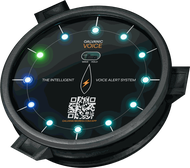




On the night of 2 December 2024, a Swedish sailor — Mr Dag Eresund, 33 — went over the side of the leading boat in the Atlantic Rally for Cruisers. Per the public statements released by World Cruising Club, his loadout was the standard offshore configuration: an automatically inflatable lifejacket with a personal AIS-MOB beacon attached. The search, coordinated by the US Coast Guard MRCC Norfolk and involving two diverted vessels, ran for nineteen hours before it was suspended at nightfall. He was not recovered. We write this carefully, with respect for him and for his family, and we make no judgment whatsoever on the conduct of any party involved. The reason this piece is written at all is that the configuration described in the public statement is the configuration almost every offshore sailor is using, ourselves included. In the days after the news, the question that returned to us was a simple one: what are we actually doing differently? The Galvanic Pulse is what came of trying to answer that question honestly.
What Happened, in the Words of the Operational Record
The facts of the incident are not in dispute, because the operators of Ocean Breeze and World Cruising Club placed them on the record. At approximately 02:27 UTC on 2 December 2024, the Volvo Ocean 70 Ocean Breeze — leading the rally — reported a man-overboard event and began recovery manoeuvres. The position was approximately 1,300 nautical miles south-east of Bermuda. The wind was west-north-west at 20 to 25 knots, gusting to 30. World Cruising Club coordinated the early response. MRCC Norfolk took operational control. The Vismara 62 Leaps & Bounds 2 — another ARC entrant — diverted. The 88-metre motor yacht Project X joined the search.
The operation ran for approximately nineteen hours. With darkness, deteriorating sea state, and no air cover possible at that distance from land, MRCC Norfolk suspended the active search at 20:45 UTC. Mr Eresund was not recovered.
Yachting World, “Man overboard in ARC: US MRCC calls off active search” (Dec 2024);
Cruising World, “Swedish Sailor Lost Overboard During ARC Rally” (Dec 2024);
MRCC Norfolk operational record.
What the Equipment Did, What It Did Not Do, and What Cannot Be Known
The configuration described in the World Cruising Club statement — an automatic-inflation lifejacket with a personal AIS-MOB beacon mounted in it — is the configuration nearly every offshore sailor uses. It is the configuration we use ourselves. After this loss, we read carefully into what is publicly known about the operation, and into how this category of equipment performs in field testing. Several things turned out to be either documented limitations of the technology in general, or simply not in the public record. We make no statement about the specific behaviour of the specific device involved in this incident.
Whether the AIS-MOB beacon activated is, publicly, not known
When asked directly whether the personal AIS beacon had activated, the director of World Cruising Club declined to speculate. Without a documented AIS distress signature on the receivers of the assisting vessels, the question is genuinely open. We are not in a position to draw any conclusion about the specific device; we note only that, in the operation that followed, the beacon’s signal does not appear to have functioned as a usable input.
Whether he was alone on deck is also not in the public record
World Cruising Club’s statements describe the incident, the response, and the operation, but they do not — at the time of writing — discuss the deck configuration in the seconds before the man-overboard alert, or how the absence was first noticed. WCC’s own published position on the circumstances is unambiguous: “we do not know the circumstances of the incident and we will not speculate.” Investigations are reportedly under way with the Austrian and Swedish authorities. We have not asked, and we will not speculate either. We mention the gap only because the duration between the wrist crossing the rail and the first action by the crew is the single most decision-critical unknown in any analysis of this kind of event. The shorter that gap, the better the recovery odds. Any technology that closes the gap by construction — that eliminates the question of “when was he last seen?” by replacing it with a logged timestamp — collapses a category of uncertainty that, in this case as in many others, the public record cannot resolve.
An important contextual point, separate from this case. On a shorthanded pleasure boat, “alone on deck” is the normal mode of operation overnight, not the exception. Two-handed cruising couples, family crews, singlehanders, and small offshore teams of three or four take turns; for most of every night passage on a small recreational vessel, exactly one person is on watch and that person is alone in the cockpit. This is structurally different from a fully-crewed clipper or a racing programme, where a second person is almost always on deck. The risk of a fall going unnoticed for minutes — rather than for seconds — is therefore a *baseline property* of how the great majority of recreational ocean miles are actually sailed. It is also the risk most underestimated by safety-equipment design that, even in 2026, quietly assumes there is someone in the cockpit to notice an empty seat.
And the wider point: aviation would have told us by now
This is not a criticism of the investigation in train — Austrian and Swedish authorities are reportedly looking at the case, and they have not yet published. It is a criticism of the maritime industry’s relationship with public learning more broadly.
If this had been a civil-aviation incident, the world would already know considerably more about it than this article is able to say. Under ICAO Annex 13 — binding on every signatory state since 1951 — civil aviation accidents are required to be independently investigated; the investigation operates under an explicit safety, not blame mandate; and the final report must be made publicly available. Preliminary reports appear within 30 days. Final reports typically follow within 12 to 24 months. The cumulative archive — NTSB in the United States, AAIB in the United Kingdom, BEA in France, BFU in Germany — is freely searchable, indexed, and read across the industry. Every airline, every flight crew, every airframe manufacturer learns from every recorded event. That is why commercial aviation is the safest mode of transport on the planet, and why a pilot stepping into a cockpit in 2026 inherits the lessons of every accident from 1951 onwards.
Recreational sailing has no equivalent. National authorities investigate selectively; reports on recreational vessels — when they appear at all — vary in depth, are slow to publish, and rarely propagate as actionable lessons across the wider sailing community. The result is that the same categories of fatal incident — fall-overboard at night, anchor drag, collision in restricted visibility, fatigue-driven error — keep happening, and each crew tends to confront them as if for the first time. The cumulative learning that aviation built into a system has been left, in recreational sailing, to private grief and word-of-mouth.
We do not say this to add to anyone’s sorrow. We say it because the structural absence of public-learning infrastructure is itself a safety failure. The sailor heading offshore for the first time next year will not be able to read what was learned from this loss, or from the next one. Until that changes — and there is currently no sign that it will — the responsibility for safety improvement falls on the people who build the equipment, and on the sailors who pay attention to one another’s losses. We have tried to take both seriously.
Personal AIS-MOB beacons have documented failure modes in field testing
Yachting World’s 2018 group test of personal AIS-MOB devices — covering Ocean Signal’s MOB1 and MOB2, ACR units, the Weatherdock easyONE, AMEC, and the McMurdo S10 — recorded a set of recurring real-world problems. They are worth listing, because they are not edge cases:
- Antenna deployment is mechanical, and not always reliable. Most personal AIS-MOB devices fold their antenna inside the lifejacket so that the act of lifejacket inflation deploys the antenna and arms the beacon. The deployment is driven by a small spring, or by a salt-tablet dissolving in seawater. Neither mechanism is perfectly repeatable; the Yachting World test documented at least one unit whose deployment scattered fragments of the dissolving salt-tablet “half way across the room” rather than releasing the antenna cleanly.
- Even when the antenna deploys, the device may not float antenna-up. For useful AIS transmission the antenna has to be oriented roughly vertical, above the waterline. Several tested units, including the AMEC, were noted to float but not antenna-up; in those orientations the transmission is significantly attenuated. Belt-clip mountings were observed to slide off the bladder during inflation, leaving the device half-submerged.
- The antenna can remain inside the lifejacket cover or be obstructed by it. Bulkier units — the McMurdo S10, the Weatherdock easyRESCUE Pro — were noted as difficult to position optimally inside the lifejacket cover; the antenna can foul on the fabric or stay partly buried when the bladder inflates.
- Manual activation is reliable only if the casualty can act. Most AIS-MOB beacons offer a manual activation slider as a backup. The slider has to be operated firmly, in cold, often with the lifejacket already inflated and obscuring access. It is a fallback that depends on the casualty being able to use it in the worst seconds — which is the very assumption a casualty cannot always meet.
- The five-mile horizon is small when nobody is inside it. A perfectly functioning AIS-MOB beacon — antenna deployed, antenna up, GPS lock acquired — has a usable horizon to other vessels’ AIS receivers of roughly 5 nautical miles in good conditions. In mid-ocean open water, with the nearest other vessel tens of miles away, the signal radiates outward into an empty receiver field.
2018; Ocean Signal rescueME MOB1 User Manual, v01.11 (2024); Ocean Signal
product literature on antenna deployment and lifejacket integration.
The vessel was moving fast when the recovery began
Independent of any specific incident, the geometry of a fast racing hull at speed is unforgiving. A Volvo Ocean 70 at racing pace covers half a nautical mile every 100 to 150 seconds. Between the moment an absence is registered, a wheel going over, sails being dumped, and the boat decelerating, a recovery start position is typically between one and three nautical miles downwind of the casualty’s entry into the water. Geometry is not a matter of training or intention; it is a matter of distance, speed, and time.
Air cover was not possible at that distance from land
A search-and-rescue helicopter operating out of Bermuda has roughly 400 nautical miles of useful range. The incident was at 1,300. A long-range fixed-wing aircraft could have launched in principle, but the math on time-to-scene, on-scene endurance, and return fuel did not work within the available daylight. The operational decision is in the record.
The search was suspended at nightfall
Nineteen hours is a long active search by any standard. With darkness, worsening conditions, and no sighting recorded in any of those nineteen hours, MRCC Norfolk’s decision to suspend was within standard procedure for offshore SAR. It is also the sentence that ends most accounts of this kind of incident.
The Question That Stayed With Us
What stayed with us, in the days that followed, was a quieter and more useful question than horror or grief at a remove. We have sailed the ARC ourselves. We have stood the night watch alone on deck, a thousand miles from any rescue, more times than we can readily count. The configuration described in the WCC statement is the configuration we carry. The watch pattern of an offshore passage is one we have run repeatedly. The conditions described are conditions we have sailed in. By any honest measure, the boundary between that situation and the situations we routinely put ourselves in is thin — which is the only reason any of this prompted us to build something.
So we asked, plainly: what are we actually doing differently? Same lifejacket. Same beacon. Same long night watch a thousand miles from rescue. The honest answer was: not much.
The uncomfortable arithmetic
Each of the layers in the standard offshore configuration — lifejacket, personal AIS-MOB beacon, lookout, MAYDAY, MRCC, assisting vessels — depends on either (a) the casualty being able to act in the first seconds, or (b) another vessel being close enough to receive a signal. Neither is guaranteed at sea. The layers all fire late: at the minute someone fails to call in, at the minute someone in the cockpit registers an empty seat, at the minute a distress signal is received by a vessel that has to be inside a small radio horizon. The seconds between the wrist crossing the rail and any of those events triggering are seconds that cannot be recovered.
Where the Boat Already Is
The boat is always about thirty metres from the wrist. The boat is the closest receiver in the world to any person on board — closer than any AIS-equipped vessel within the horizon, closer than any helicopter ever can be, closer than any other crew member asleep in another cabin. If the alarm were the absence of a signal rather than the presence of one — if the wristband were silent for one second longer than it ought to be, and the boat itself fired the alert — the alarm would fire at second one. Not at minute three. Not at the next watch change. Second one.
That is the entire idea of the Galvanic Pulse, written in one paragraph. Everything else is engineering.
We Did Not Invent the Negative Signal. We Borrowed It.
The principle that “the alarm is what fires when the wearer stops responding” is older than recreational sailing. Aviation has used it since the Cold War — an aircraft whose transponder stops squawking is, on every controller’s screen, an immediate problem. Avalanche-rescue beacons work the same way: a beacon that goes silent is the alarm. In recreational sailing the principle reached the market in 2007 with the Raymarine LifeTag wristband system, and through similar products since.
introduced 2007; aviation transponder-loss alerting per ICAO Annex 10 and
FAA Order JO 7110.65 (controller obligations on Mode A/C/S signal loss).
What is striking is how stubbornly the marine industry kept building the other kind of MOB device — the kind that depends on the casualty doing something. Personal AIS beacons are extraordinary products: they will shout loudly to any AIS receiver inside their horizon, in any weather, for many hours. But they are a positive-signal system. They depend on activation — by water sensor, by spring, by manual slider — at exactly the moment when “depending on something working” is the assumption least worth making.
On a boat with the negative-signal layer in place, the assumption does not have to be made. The boat is the receiver. The wrist is the transmitter. The alarm is silence. The casualty is permitted to be unconscious, injured, or unable to find a button, because the boat was already listening on their behalf.
What the Galvanic Pulse Cannot Do — and What It Can
We are careful about the limit, because the limit is real. The Galvanic Pulse does not change the geometry of a fast vessel at speed. It does not turn a Volvo Ocean 70 into a Sunday cruiser. The crew still has to come about. The casualty is still in the water. The wind is still what it is, the swell is still what it is, the temperature of the water is still what it is. The bracelet does not lift anyone out of the ocean — the crew does. The tool cannot do what only the crew can do.
What the Galvanic Pulse can do is give the crew the first minute back. The minute that the AIS beacon cannot be relied on to buy — because deployment may not have worked, or the antenna may not be vertical, or no receiver is close enough to hear it. The minute that lookout cannot buy, because the lookout is forward when the casualty goes off the stern. The minute that MAYDAY cannot buy, because nobody yet knows there is a MAYDAY to call. That minute is the difference between “we knew immediately and went straight back” and “we noticed three minutes later when nobody answered the radio.”
And — just as important — it gives the crew back the position at which the signal disappeared. Nothing more. The Galvanic Pulse does not see the casualty in the water, does not steer the boat back to them, does not have an opinion on what the wind is doing or how half a knot of current may have displaced a human body across thirty seconds. What it does is record, at the second the wrist crosses the line, the exact latitude and longitude where it last heard the bracelet — and then it hands that single coordinate to the crew, on the Voice, on every screen on the boat, the moment the alarm fires. That one coordinate is the only fixed point in a problem that otherwise consists entirely of moving parts.
That single coordinate matters more than it looks. A man-overboard recovery is, in the cold operational sense, a navigation problem — and a hard one. It has to be solved under time pressure, in conditions the crew did not choose, usually at night, by people whose cognitive resources are at their worst. The crew member who has just been shaken out of a bunk to deal with it has been asleep for ninety minutes. The crew member who was on deck when it happened has been on watch for hours and was probably already counting the minutes to the handover. Neither is currently in a state to do mental geometry over wind, current, leeway, and search-pattern geometry from a moving boat that has already covered a mile or two downwind of the event. The bracelet does not solve that problem. What it does is give that group of tired humans the anchor point of the problem — a fixed mark on the chart from which everything else (drift, leeway, search pattern, drift forecast) can be reasoned forward. Reasoning forward from a known point is difficult enough. Reasoning forward from “somewhere back there, I think” is much closer to impossible.
A point worth saying out loud about shorthanded sailing, because it is rarely said: a recovery is often run by the least prepared person on the boat. The most experienced sailor on a passage is, by definition, frequently the one off-watch when the emergency happens. The recovery is then run by a partner, a friend along for the leg, or whichever crew member was on deck — often with one fewer hand than the boat would normally have, often by lamplight, often after a watch that has already eroded everyone’s margin for clear thought. Anything that takes a piece of difficult-to-retrieve information out of fallible human memory and puts it on a screen automatically, with a timestamp, is helping that specific person make better decisions in the only minutes that matter. The position of the casualty at the moment of separation is one of the most decision-critical pieces of information in the recovery, and the one a tired, frightened brain is least equipped to recall accurately.
US Coast Guard and UK MAIB data on man-overboard fatalities both place the steep part of the survival curve inside the first ten minutes from immersion. Three minutes of delay versus zero minutes of delay is a very different conversation within that window — and so is *”I know exactly where to start searching”* versus *”I think it was somewhere around here.”*
Statistics, annual reports. Maritime Accident Investigation Branch (UK
MAIB), reports on pleasure-craft MOB incidents 2015–2023.
Adding, Not Replacing — Two Layers Beat One
One clarification we want to make explicit, because it matters. With the Galvanic Pulse on the wrist, are we removing the personal AIS-MOB beacon from our lifejacket? No, and we never planned to. We are adding the bracelet to our loadout, not swapping anything out. The AIS-MOB beacon — with the field-testing caveats described earlier — remains a useful layer when it works as designed; on the right day, in the right location, with the right vessels in range, it can do exactly what it was built to do. The Galvanic Pulse is a second, independent layer that fires immediately, on the boat itself, and that does not depend on the casualty being able to act.
Looking ahead, our roadmap is to bring the same negative-signal principle to the lifejacket itself — so that the boat knows not only when a crew member crosses the rail, but also whether they were actually wearing their lifejacket when they did. Two pieces of decision-critical information that nobody on the boat will reliably gather by hand at three in the morning. Two independent ways for any of them to fail. Two independent layers that would have to fail together for the system as a whole to go silent.
This is the reason aviation works. Commercial aviation is the safest mode of transport on the planet not because any single component is uniquely reliable, but because the system is designed so that no single failure is catastrophic. Engines come in pairs or quads, on aircraft certified to fly on one fewer. Hydraulics are triple-redundant. Avionics are multi-channel. Navigation has GPS plus inertial plus radio. If one layer fails, the next picks up. The casualty rate is what it is because the cumulative probability of every layer failing simultaneously, on the same flight, is vanishingly small.
A sailing boat is allowed to apply exactly the same logic. Two ways to detect a man-overboard event are better than one. Two ways to confirm whether the crew member was actually wearing their lifejacket are better than one. The Galvanic Pulse is not designed to replace any layer of the existing offshore-safety configuration. It is designed to be the layer that does not require the casualty to do anything — sitting alongside the layers that, when they work, still do useful things. Two beats one. Always.
Why We Built It
Looking past any individual case, what the standard offshore configuration — auto-inflate lifejacket plus personal AIS-MOB beacon — quietly assumes is that the casualty will be in a position to cooperate with their own rescue. Every layer in that stack is built around that assumption, and the assumption is the one a person in the water is least able to guarantee.
The only thing we could think to change was that assumption. So we built a layer that does not depend on the casualty being able to act at all.
The bracelet is small, light, and quiet. It does not look like the most important piece of safety equipment on the boat. We have come to believe that it is.
About this piece.
All factual statements about the events of 2 December 2024 are drawn entirely from public statements issued by World Cruising Club and from the operational record released by MRCC Norfolk, as reported in Yachting World, Cruising World, and Yachting Monthly between 2 and 4 December 2024. We have made no first-hand observation of any aspect of the incident, the recovery operation, or the equipment in use. We make no judgment, express or implied, on the conduct of the casualty, the crew of Ocean Breeze, the operators of any assisting vessel, the rally organiser, the search authority, or the manufacturers of any equipment carried. The general statements about personal AIS-MOB beacons in this piece refer to field-test findings published by Yachting World in 2018, covering devices from several manufacturers — not to the specific device that may have been in use on the night in question. Any inferences about the limits of any specific product are the reader’s own; we do not draw them.
The 3AM Report — a free safety briefing on what hundreds of incident reports reveal.
Man Overboard: The Mathematics of Dying Alone at Sea — the statistical companion to this piece.


Leave a Reply