
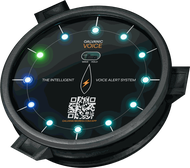




Open any marine-electronics brochure — for an AIS overlay, a connected anchor alarm, a smart NMEA gateway, a black-box monitor, an app, almost any of them — and somewhere in the body copy you will find a sentence that goes “…like having another crew member on board.” Or “a second pair of eyes that never sleeps.” Or “the crewmate who never gets tired.” It is the single most over-used line in marine-electronics marketing. It is also, on inspection, insulting to every sailor we know. We will not use it in our copy. This piece is the reason why.
The Line We Cannot Stand
Between us we have extended business experience, marketing included, and we have read more marine-electronics brochure copy than is healthy for any adult. We know exactly how this particular sentence gets written. It is written because it converts. The vendor is trying to give a prospective buyer something to compare the device against — a recognisable, valuable thing — and the easiest recognisable, valuable thing on a boat is a capable crewmate. So the copywriter reaches for it. The line lands. The order is placed. Everyone goes home.
It is also, when you stop and read it as a sailor, a category error so large that you wonder how it became the default. The vendor has compared a piece of electronics to a human being and concluded that the electronics is roughly equivalent. To anyone who has ever shared a forty-foot boat with another adult for more than ten days, this is a risible claim. Let us say why.
What an Actual Crew Member Does
In rough order of how we encounter them on a passage:
- Takes a watch. A real one — six hours awake at the helm, alone, in the dark, eating a sandwich one-handed because the other hand is on the wheel.
- Fixes a torn genoa clew at 03:00 with a sail-repair kit and a head torch, because that is the only way the boat will still be sailing at dawn.
- Reads the body language of the partner who has not said a word in two hours and figures out whether they need a coffee, a hot meal, or to talk about something that happened ten years ago.
- Calls a marina in Mallorca in Spanish and negotiates a stern-to berth with weather coming in.
- Smells the engine when something is off. Hears the rigging when it isn’t right. Feels the swell when it is about to change.
- Has opinions about reef points. Has preferences about anchorages. Has a way of taking the helm that you either love or merely tolerate.
What a Piece of Electronics Does
- Beeps. Speaks. Lights up. Logs. Sometimes it talks — at length, in calibrated sentences, with an actual opinion about the depth-trend or the CPA — like the Galvanic Voice does. But:
- Does not take a watch — it does not get tired, but it also does not see in any meaningful sense; it senses what its sensors sense, and that is a much smaller catalogue than what a human on watch sees.
- Does not fix anything that isn’t software.
- Has zero theory of mind about the cook in the galley.
- Talking, when it does talk, is not the same as being part of the crew. It is the same as a very well-designed warning sign that happens to use words instead of pictograms.
These Two Things Are Not the Same Thing
Every sailor knows that. And the marketing that pretends otherwise is talking down to the reader — assuming the reader cannot tell the difference between a tool and a crewmate. We assume the opposite: that our readers know exactly the difference, because we are sailors and our readers are sailors, and the gap between a piece of electronics and a person is one of the more obvious distinctions in the world.
The line also has a second, quieter effect that we find genuinely irritating. By flattering the device into the role of a crewmate, the copywriter is implicitly demoting the crewmate — suggesting that a real person on watch is a sort of expensive, optional luxury that this cheaper, electronic version replaces. The opposite is true. The crew is the most important thing on the boat. The crew is the reason the boat is sailing at all. The tool is what helps the crew do its job. Anyone who has confused those two has not been to sea recently enough to be making marketing claims about it.
And the Other Reason the Metaphor Falls Apart
An extra crew member is not a free gift. An extra crew member is an extra bunk; an extra portion at every meal; extra head time; extra fresh water; and, on day six on the nose with sleep debt all round, an extra personality at 03:00 when patience has run thin and the windvane is doing something unhelpful. A real crewmate is a full human relationship that you choose deliberately, with your eyes open, knowing all of those costs. Flattering a piece of electronics into the role of crew is the wrong direction of comparison. The crewmate is not the inferior thing in that equation.
What We Will Say Instead
The Galvanic Voice is a tool. A very good one — the best one we know how to build, against a constraint set nobody else seems to be designing against. It does the things tools can do: it watches the sensors, runs the math, speaks the result, sleeps quietly between alerts, does not get tired, does not get bored, does not have a bad day. It does not take a watch. It does not fix the genoa. It does not have a personality. And it does not pretend to be anyone you have ever sailed with.
What We Are Giving You, Instead of a “Crew Member”
The time you would otherwise have spent monitoring screens. The attention you would otherwise have spent interpreting beeps. The first minute back if someone goes over the side. The honest number on your boat’s actual polar — the one your boat drew of itself, not the one in the manual. The voice that reaches the off-watch when the MFD cannot. A tool, doing what tools do. Sailors do the sailing.
And Finally
When you buy a Galvanic Voice, you are not buying a crew member, and we will not insult you by pretending you are. You are buying a tool that does what tools can do, so that you can do what only sailors can do. The crewmate is, and always will be, you — and the people you chose to sail with.
Galvanic Works research — two open-access preprints on fatigue and cognitive load at sea.
The 3AM Report — a free safety briefing on what hundreds of incident reports reveal.


Leave a Reply